
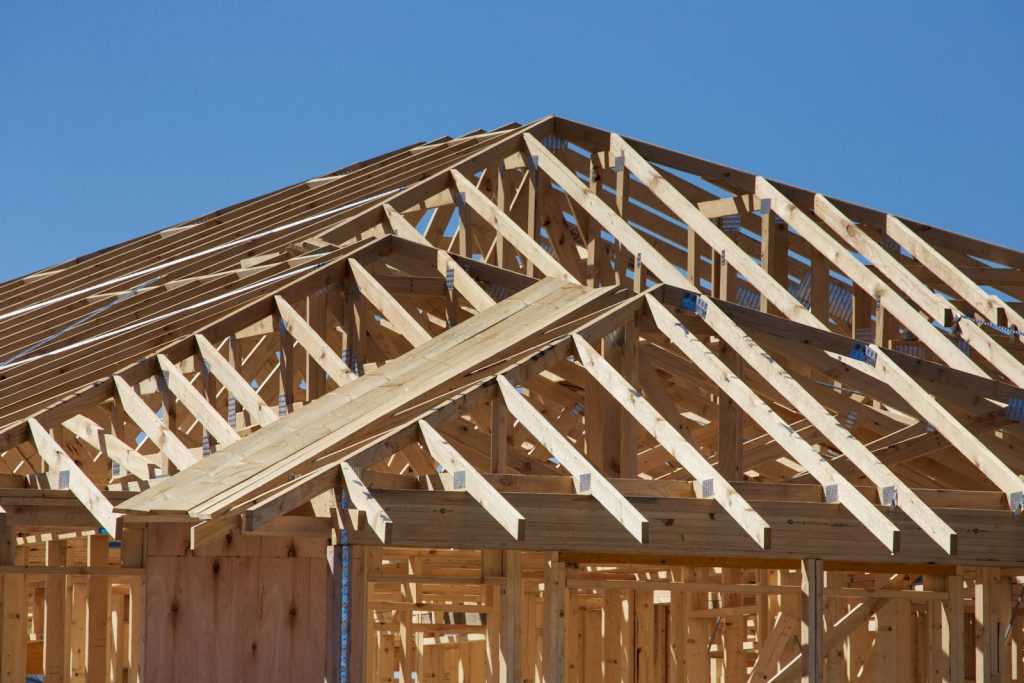
Michigan taxes a new house as it rises out of the ground. Here is what the lot, the half-built frame and the finished home each cost in Troy, when the escrow shock lands, and the forms and deadlines that decide the bill.
By BIG Real Estate · October 26, 2026 · Oakland County, Michigan
Builders are in a giving mood this fall. The National Association of Home Builders' October survey found 43% of builders cutting prices and 65% offering incentives, with builder confidence at its lowest reading since June 2012. Single-family starts in September fell to their lowest level in a year, and Oakland County issued 2,023 residential permits in 2025, 30% fewer than in 2024. If you are shopping a spec home or pricing a custom build, you have more leverage than you did two years ago.
What the brochure does not explain is how Michigan will tax the house once it exists. A new home does not get one tax bill; it gets three different ones in sequence: a bill for the lot, a bill for a partly finished house, and finally a bill for the whole thing. Buyers who set their budget (or let their lender set their escrow) on the first or second bill get a very expensive surprise at the third. This article walks through the mechanics, using the statute, the county's own guidance and a worked example at 2025 Troy tax rates.
This is general information, not tax or legal advice. Your assessor, lender, builder contract and title company determine the actual numbers.
Why a new house is taxed differently from a resale
Michigan's Proposal A caps how fast a home's taxable value can rise: each year the increase is limited to the inflation rate or 5%, whichever is lower, until the property changes hands. We covered the reset that follows a sale in our guide to property tax uncapping for Oakland County buyers.
New construction sits outside that cap by design. The General Property Tax Act defines "additions" to taxable value, and the list includes "new construction," meaning "property not in existence on the immediately preceding tax day and not replacement construction" (MCL 211.34d(1)(b)(iii)). The value of new construction, the statute says, is "the true cash value of the new construction multiplied by 0.50," and it is added to taxable value on top of whatever the inflation formula produces (MCL 211.27a(2)).
Two other dates matter. Michigan's tax day is December 31: the taxable status of property for a given year "shall be determined as of each December 31 of the immediately preceding year" (MCL 211.2(2)). And when a lot changes hands, its taxable value resets to the state equalized value in the calendar year after the transfer, exactly as it would for a finished home.
Put those rules together and the sequence looks like this.
Step one: the lot
Buy a vacant lot in 2027 and your 2027 bills are based on the seller's capped taxable value, which may be far below what you paid if the seller held the land for years. In 2028 the lot uncaps to its state equalized value (SEV), nominally half of market value.
Two details catch people here. First, the Principal Residence Exemption, which removes up to 18 mills of school operating tax, requires that you own and occupy the property as your principal residence (MCL 211.7cc). A bare lot, or a house you have not moved into, pays the full non-homestead rate. Second, the lot is a "transfer of ownership" like any other, so you owe the assessor a Property Transfer Affidavit within 45 days of closing (MCL 211.27a(10)); the penalty for missing it runs $5 a day up to $200 for a principal residence and up to $4,000 otherwise (MCL 211.27b).
Step two: whatever is standing on December 31
Because tax day is December 31, the assessor values what physically exists on that date. Michigan assessing offices that publish their practice describe it the same way: a house that is "50% completed as of year end" is assessed for the coming year as partial construction, and the assessor returns the following year to "change the partial construction assessment to a completed house assessment" (Tallmadge Charter Township, Ottawa County, assessor's page). Oakland County assessors apply the same tax-day rule (Southfield Township assessing page); the county's Equalization Division confirms that "Tax Day is December 31st" and that the current tax year is based on the status of property on the prior December 31 (Oakland County Equalization FAQ). The percentage itself is an assessor's judgment, usually made from a site visit after the building permit is pulled, and it is appealable at the March Board of Review like any other value.
The practical consequence: a foundation poured in late December produces a modest 2028 bill; a house that is framed, roofed and drywalled by December 31 produces a much larger one. Do not distort a real construction schedule for tax reasons, but understand that the year-end snapshot, not your closing date or your certificate of occupancy, sets the next year's bill.
Step three: the finished house
The first tax year after the home is complete on December 31, the full addition goes onto the roll at half its true cash value. From that year forward the normal cap applies to the new, higher base.
One point builders and buyers alike get wrong: the assessor does not simply take your contract price. State law says "the purchase price paid in a transfer of property is not the presumptive true cash value" and the assessor must use "the same valuation method used to value all other property of that same classification" (MCL 211.27(6)). The county repeats it: "the sale price of a property cannot be the sole determining factor of the assessment of that property." For new homes that method is a cost approach adjusted to local sales, so a house that is over-built for its street can be assessed below cost, and a bargain lot can be assessed above what you paid.
A worked example at Troy's 2025 rates
Assume a $200,000 lot bought in spring 2027, a $600,000 build, and a finished market value of $800,000. Assume the assessor's figures land at half of those numbers (they will not land exactly there; this is illustrative). Troy's 2025 certified rate for a principal residence in the Troy School District is 36.0430 mills; the non-homestead rate is 51.4634 mills (Oakland County 2025 Apportionment Report). Troy spans seven school districts and every Oakland community has its own rate, so your numbers will differ.
How the bill steps up (illustrative, Troy / Troy School District, 2025 rates)
- 2027 — Seller's capped lot value on the roll · taxable value unknown until you ask · non-homestead rate · often a small bill
- 2028 — Lot uncapped plus house 40% complete on Dec. 31, 2027 · taxable value $100,000 + $120,000 = $220,000 · non-homestead rate (not yet occupied) · about $11,300
- 2029 — Complete home, occupied, PRE filed · taxable value about $400,000 · principal-residence rate · about $14,400
Bills = taxable value ÷ 1,000 × millage, before any administration fee. The 2029 figure assumes you occupied the home and filed the PRE affidavit before the June 1 deadline; without the exemption the same house owes about $20,600 at the non-homestead rate.
The jump from the lot to the finished house is the point. A buyer whose mental budget was built on the lot's bill, or a spec-home buyer handed a copy of the builder's "last year's taxes," is planning around a number that is about to triple.
The escrow shock, and how to avoid it
Most mortgages collect property taxes monthly into escrow. Federal escrow rules let the servicer estimate the tax line from "the preceding year's charge" when the current amount is unknown, and specifically allow, "in cases of unassessed new construction," an estimate based on "the assessment of comparable residential property in the market area" (Regulation X, 12 CFR 1024.17(c)(7)). Which of those two methods your lender uses makes a four-figure difference.
Run the Troy example with the lazy method. The lender escrows on the lot-only bill of roughly $5,100 a year, about $430 a month. The first full-value bill of about $14,400 arrives, the escrow account goes negative by about $9,300, and at the annual analysis the servicer must collect the deficiency. Regulation X lets a servicer recover a shortage of one month's payment or more over at least 12 months, and a deficiency (a negative balance) in "two or more equal monthly payments" (1024.17(f)(3) and (f)(4)); twelve months is common practice, and the rule allows faster. Spread over a year, the new escrow line becomes about $1,200 a month for the correct bill plus roughly $770 a month to repay the deficiency: the total payment rises by about $1,540 a month for a year, then settles about $770 a month above where it started.
The fix is simple and worth insisting on at closing: ask the lender to set the initial escrow on the finished home's estimated taxes at the non-homestead rate until your PRE is in place, and ask in writing for the analysis to be rerun once the first full-value bill is issued. Over-funding escrow for a year is a nuisance; a $1,500 payment jump is a budget crisis.
Builder spec homes: why "last year's taxes" is a floor, not a forecast
A finished spec home listed by a builder carries a tax history that tells you almost nothing about your future bill, for three reasons.
- Partial or land-only valuation. If the house was not complete on the last December 31, last year's bill reflects a lot or a fraction of a house.
- The developer exemption. Since 2012, a new residential structure that "is not occupied and has never been occupied," "is available for sale," is not leased and is not used for business can be exempt from the school operating levy for up to three years as "eligible development property" (MCL 211.7ss). The builder files Treasury Form 5033 to claim it. The exemption ends when you buy, so the builder's bill is missing up to 18 mills that you will pay unless and until your own PRE replaces it.
- Uncapping. Your purchase is a transfer; the year after closing the taxable value resets to SEV regardless of what the builder was paying.
The reliable number is the assessor's: call the city or township assessing office with the parcel number and ask for the current SEV and the millage for your school district, then compute SEV × millage ÷ 1,000. In a new subdivision, also ask whether the SEV on the record card already reflects the completed home.
New subdivisions: the costs the cap never touches
Two items in new developments live outside the taxable-value cap entirely.
Public services. The same statute that defines new construction as an addition also treats the arrival of "water service, sewer service, a primary access road, natural gas service, electrical service, telephone service, sidewalks, or street lighting" as an addition: the increase in true cash value attributable to those services, times 0.50, is added "in the calendar year following the calendar year when those public services are initially available" (MCL 211.34d(1)(b)(vii)). A lot that gains municipal water and sewer after you buy it can see its taxable value rise for that reason alone.
Special assessments. Townships pay for subdivision roads, paving, water and sewer through special assessment districts that are billed on the tax statement but are not ad valorem taxes, so no cap, no PRE and no Board of Review valuation appeal applies to them. Two current Oakland County examples show the pattern. Commerce Township established the Island Club Paving Special Assessment District on March 10, 2026, approved the roll on April 15, and in June revised it to bond financing under Public Act 188 of 1954, adjusting "the interest rate on unpaid future installments"; the notice states that once approved, "the assessment will be a lien on the affected property" and that an owner may appeal to the Michigan Tax Tribunal within 30 days of the roll's confirmation only if the assessment was protested at the hearing (Commerce Township notices, Feb. 25 and May 27, 2026). Bloomfield Township held a hearing of necessity on February 24, 2025 for Special Assessment District 431, 2.90 miles of subdivision road paving with curb, gutter and underdrain replacement, with the same rule that "your appearance and protest are required at the Hearing" to preserve a Tribunal appeal (Bloomfield Township notice). Under the statute, confirmed assessments are "final and conclusive" unless contested within 30 days (MCL 41.726).
For a buyer the lesson is timing. The hearing where you could have objected usually happened before you owned the lot. Before closing, ask the title company for any outstanding special-assessment balance and the remaining installments, and ask the township clerk whether a district is pending for your street. In a brand-new development, ask the builder in writing who is paying for the roads and utilities and whether any of that cost will be assessed back to lot owners.
Finishing the basement later: additions versus repairs
Many new-build buyers leave the basement unfinished to hold the price down and finish it later. Understand the tax treatment before you do. Michigan's "Mathieu-Gast" rule says the assessor "shall not consider the increase in true cash value that is a result of expenditures for normal repairs, replacement, and maintenance" until the property is sold, and lists what qualifies: painting, replacing a roof, siding, windows, furnace, water heater, plumbing and light fixtures, rewiring, new floor and wall surfaces, and, since 2022, a whole-home generator (MCL 211.27(2)).
Finishing a basement, adding a garage, a deck, a porch or square footage is not on that list. It is new construction, "property not in existence on the immediately preceding tax day," and goes onto the roll as an addition at half its value the year after it exists on December 31. Pull the permit anyway; unpermitted work is a disclosure and insurance problem later, and omitted improvements can be added to the roll for the current and two preceding years once discovered (MCL 211.34d(1)(b)(i)).
The calendar, in order
- Lot or spec purchase. Property Transfer Affidavit (Treasury Form 2766 / L-4260) to the local assessor within 45 days. Ask the title company for special-assessment balances.
- Construction loan or mortgage. Have the lender escrow on the finished home's estimated bill, non-homestead rate, from day one.
- December 31 of each year. Know what will be standing. If the schedule is genuinely flexible, a foundation that waits for January costs nothing in taxes for the coming year; a house nearly done by New Year's Eve is taxed as such.
- Move-in. File the Principal Residence Exemption affidavit (Form 2368) with the assessor: by June 1 to cover that year's summer and winter bills, by November 1 for the winter bill only (MCL 211.7cc(2)). If you still own your previous home and it is vacant and listed, a conditional rescission can keep its exemption for up to three years (Form 4640).
- February after completion. Read the assessment change notice. Compare the SEV to what comparable new homes sold for, check the record card's square footage and finish counts, and talk to the assessor first.
- March Board of Review. The only annual window to appeal value (MCL 211.30). A fee appraisal dated near December 31 is the strongest exhibit. A reduction won in the first full-value year compounds under the cap for as long as you own the home.
- Every year after. Expect the cap to apply: 2.7% in 2026, and likely a little more in 2027 once the State Tax Commission publishes the multiplier.
What this means for different buyers
Custom builders. Budget three bills, not one. The year you are paying a construction loan, rent or a second mortgage is also the year you pay non-homestead rates on a partly built house you cannot yet exempt.
Spec-home buyers. Treat the builder's tax figure as a floor. Get the SEV from the assessor, apply your school district's millage, and ask whether the development exemption is on the parcel.
Move-up buyers who are building. The conditional rescission is your friend: file it on the old house the moment you move, so you are not paying non-homestead rates on both homes while the old one sells. Our guide to selling this fall covers what to expect from that sale in the current market.
Investors buying new. None of the exemptions apply to a rental. Price the full non-homestead bill on the completed SEV, plus any special assessment, into the underwriting from day one.
The takeaway
Michigan does not tax what you paid for a new home; it taxes what exists on December 31, at half its value, on top of a cap that resets when land changes hands. The bills climb in steps as the house does, the exemptions that soften them require filings with hard deadlines, and the single most common mistake, an escrow set on the lot's bill, is entirely avoidable with one conversation at closing. Ask the assessor for the finished number before you sign, and plan the budget around it.
Property tax rules change and every parcel is different. Confirm your situation with the local assessor, your lender and a qualified tax professional before relying on any figure here.